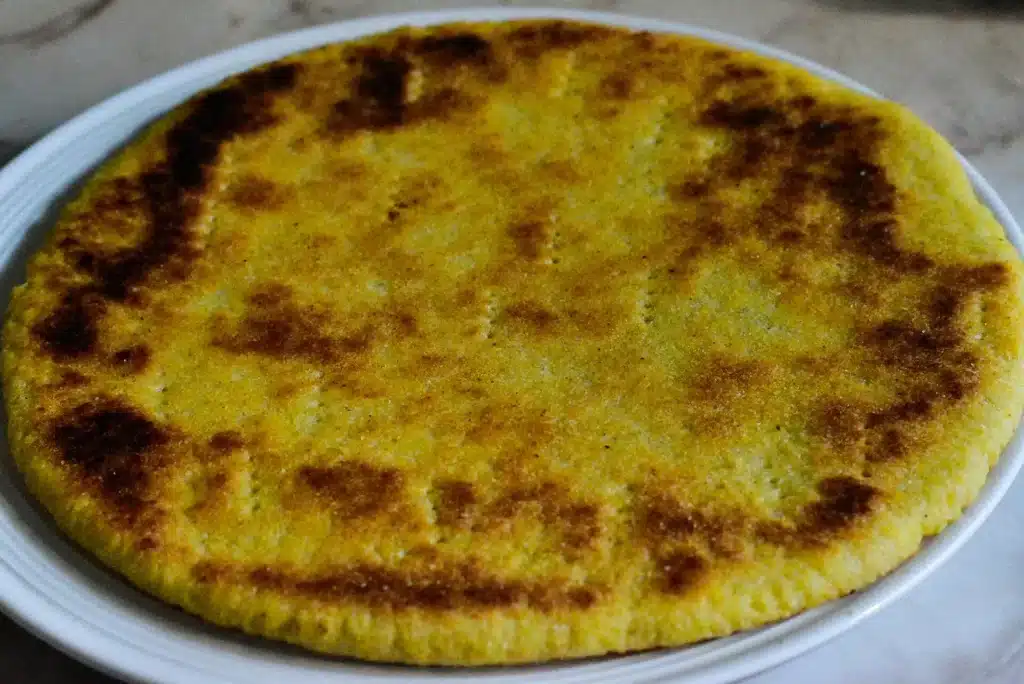
If you are looking to master the arts of traditional North African bread making, learning an Authentic Algerian Kesra Rakhsas Recipe is one of the best places to start your kitchen journey. Unlike heavily leavened loaves that require hours of proofing, this iconic Algerian flatbread relies on fine durum semolina, quality olive oil or clarified butter, and aromatic seeds to create a golden, slightly crumbly crust with a tender interior. To explore the historic role of durum wheat flatbreads across North Africa, you can check out the global history of traditional flatbreads and their regional variations.
Often served alongside steaming bowls of spicy pepper salads, chorba, or fresh buttermilk, this pan-cooked bread is a staple in everyday Algerian homes. Preparing an Authentic Algerian Tajine Lahlou Recipe or a warm vegetable stew is never fully complete without a warm slice of fresh Kesra on the side.
What Makes an Authentic Algerian Kesra Rakhsas Recipe So Unique?
The magic of an Authentic Algerian Kesra Rakhsas Recipe lies in its distinct texture, known locally as m’besses (rich and crumbly). While other regional breads like Matlouh depend on yeast to achieve an airy sponge, Rakhsas uses oil or Smen to coat the semolina grains before adding water. This prevents heavy gluten development and creates a galette-style flatbread that is both crispy on the edges and soft in the middle.
Historically cooked on a heavy ribbed terracotta or cast-iron griddle called a Tajine, the dough is pricked all over with a fork to ensure even heat distribution and prevent large air pockets from puffing up during cooking. The addition of nigella seeds (black seed) and sesame seeds gives every bite a warm, nutty aroma that fills the entire kitchen.
Essential Ingredients for Authentic Algerian Kesra Rakhsas Recipe
To prepare this comforting traditional flatbread at home, gather these simple pantry ingredients:
- The Base: 500g fine or medium fine durum semolina (Do not use coarse semolina or white cake flour).
- The Fat: 1/2 cup (120ml) of neutral oil or olive oil (or a mix of melted butter/Smen and oil for extra richness).
- The Flavorings: 1 teaspoon fine salt, 1 tablespoon nigella seeds (Sanooj), and 1 tablespoon toasted sesame seeds.
- The Leavening Hint: 1/2 teaspoon instant active yeast and 1/2 teaspoon sugar (optional, used lightly for flavor and softness rather than heavy rising).
- The Liquid: Approx. 1 cup of warm water (added gradually depending on semolina absorption).
Step-by-Step Guide to Master Authentic Algerian Kesra Rakhsas Recipe
Follow these quick and foolproof steps to create perfectly circular, golden-brown semolina galettes every single time:
Step 1: Rubbing the Semolina (The Sablage Method)
In a wide shallow bowl (Gasaa), combine the fine semolina, salt, nigella seeds, toasted sesame seeds, yeast, and sugar. Pour in the oil. Using the palms of your hands, rub the semolina grains thoroughly with the oil for 2 to 3 minutes. This critical step ensures the oil coats every grain, guaranteeing that classic crumbly texture.
Step 2: Forming the Dough Balls
Gradually sprinkle warm water over the semolina mixture while bringing the dough together with your fingers. Do not knead aggressively like bread dough; simply gather it into a smooth, cohesive ball that holds its shape without sticking to your hands. Divide the dough into two equal balls and let them rest covered under a clean cloth for 10 to 15 minutes.
Step 3: Shaping the Flatbread
Place a dough ball on a clean working surface or a sheet of parchment paper lightly dusted with semolina. Using the palm of your hand and fingers, gently flatten and press the ball into a neat, round circle approximately 1 cm (0.4 inches) thick. Use your thumb to smooth any cracks along the edges.
Step 4: Cooking on the Tajine
Preheat your terracotta Tajine or heavy cast-iron skillet over medium heat for 5 minutes. Gently transfer the shaped galette onto the hot skillet. Immediately prick the surface all over with a fork in a decorative circular pattern.
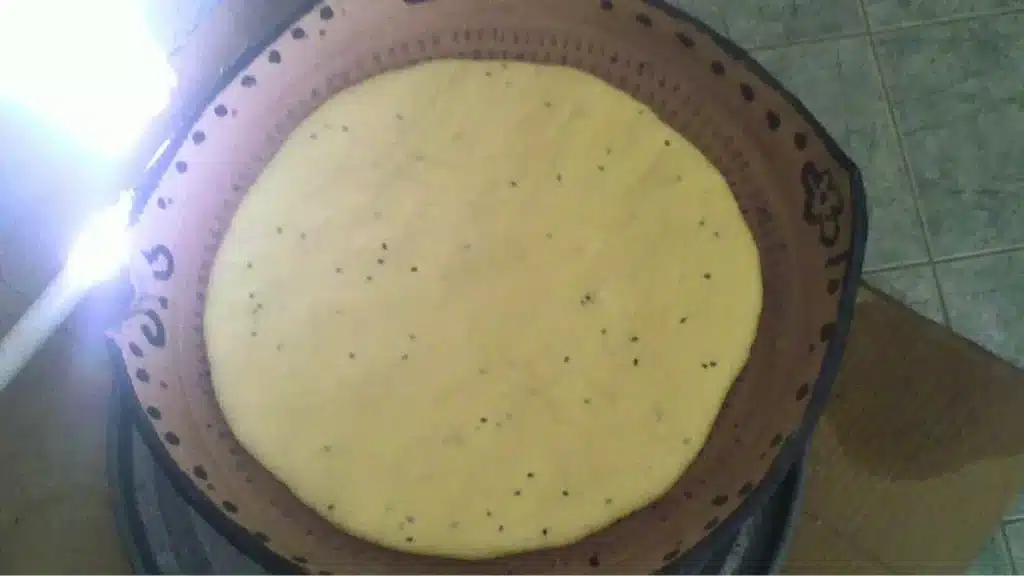
Step 5: Toasting to Golden Perfection
Cook the flatbread for 4 to 5 minutes on the first side. Rotate it occasionally using a wooden bread press or cloth to ensure even golden browning. Flip the flatbread carefully and cook the second side for another 4 minutes until both sides feature dark golden ring marks. Stand the bread on its edges briefly to cook the sides if desired.
Best Ways to Serve Your Fresh Semolina Flatbread
Once removed from the griddle, place the hot flatbread on a wire rack or clean kitchen towel to preserve its crispiness. Cut it into quarters or small wedges and serve immediately with:
- Roasted Pepper Salads: Perfect for dipping into traditional Slata Mechwiya or spicy Hmiss.
- Soups & Stews: Pairs wonderfully with traditional Chorba Frik, Rechta, or Chtitha.
- Tea Time: Slice it hot and spread with fresh butter, honey, or soft goat cheese alongside mint tea.
Conclusion
Bringing an Authentic Algerian Kesra Rakhsas Recipe to your home kitchen connects you with generations of North African culinary tradition. Easy, fast, and incredibly satisfying, this semolina flatbread is bound to become a regular staple on your dining table.
If you enjoyed making this classic recipe, be sure to check out our last 5 published recipes on Rebiaimineat for more authentic ideas:
- Learn how to make a classic roasted salad with our Authentic Algerian Slata Mechwiya Recipe in 6 Steps.
- Try delicious deep-fried traditional donuts using our Authentic Algerian Khfaf Recipe.
- Master light honeycomb semolina pancakes with the Authentic Algerian Baghrir Recipe.
- Discover coastal seafood stews with the Authentic Algerian Goumghar Recipe.
- Spice up your menu with our Authentic Algerian Chtitha Djaj Recipe (Chicken Chtitha).
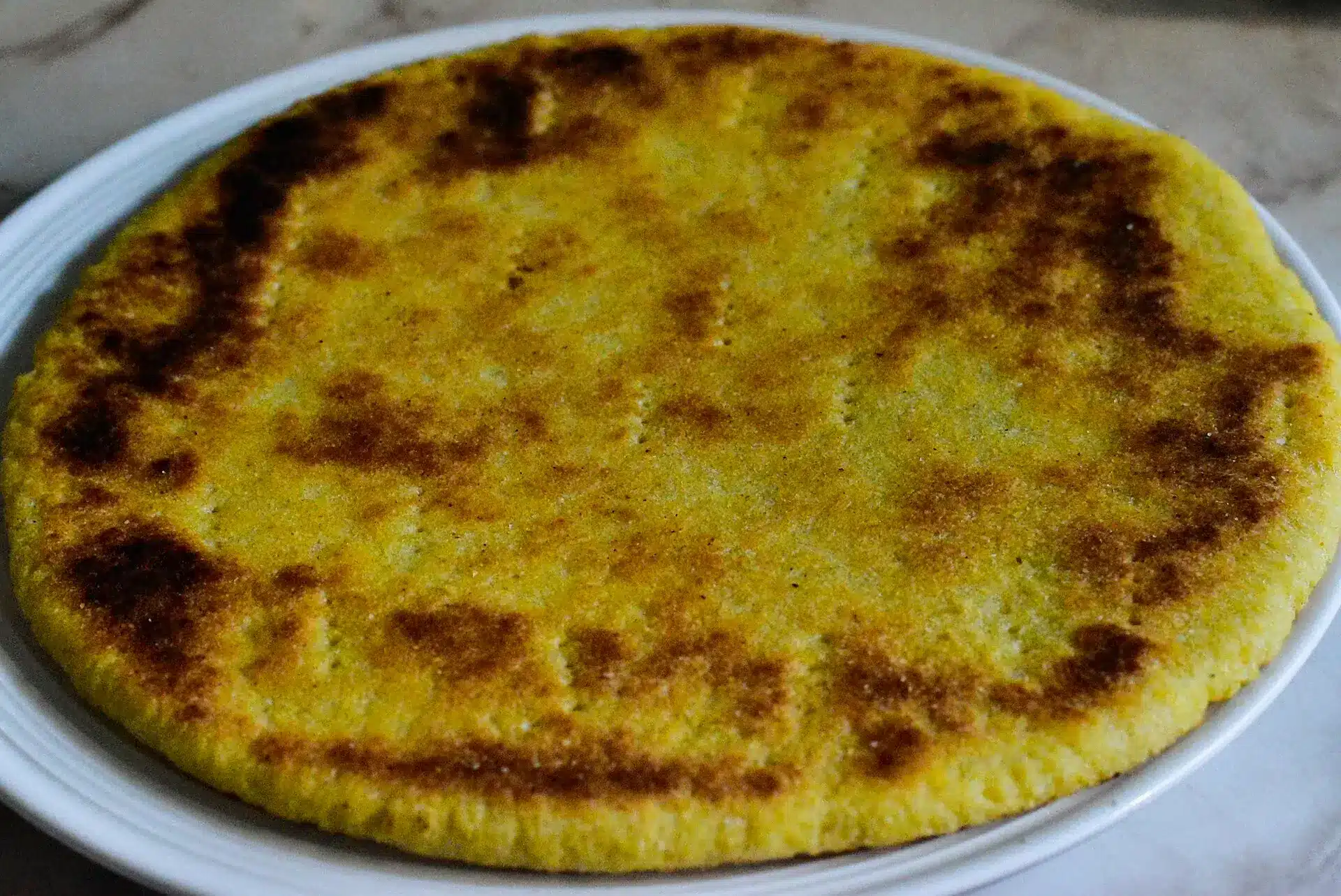
Authentic Algerian Kesra Rakhsas Recipe
Ingredients
Method
- In a large bowl, mix semolina, salt, nigella seeds, sesame seeds, yeast, and sugar.
- Add oil and rub the semolina thoroughly between your hands for 2 minutes to coat every grain.
- Gradually add warm water until the mixture forms a cohesive dough ball without over-kneading.
- Divide dough into 2 equal balls, cover, and let rest for 10-15 minutes.
- Flatten each ball on parchment paper into a circular disk (1 cm thick) and smooth edges.
- Transfer to a preheated heavy cast-iron skillet or terracotta Tajine over medium heat. Prick all over with a fork.
- Cook for 4-5 minutes per side, rotating frequently for even golden-brown toast marks. Serve warm.