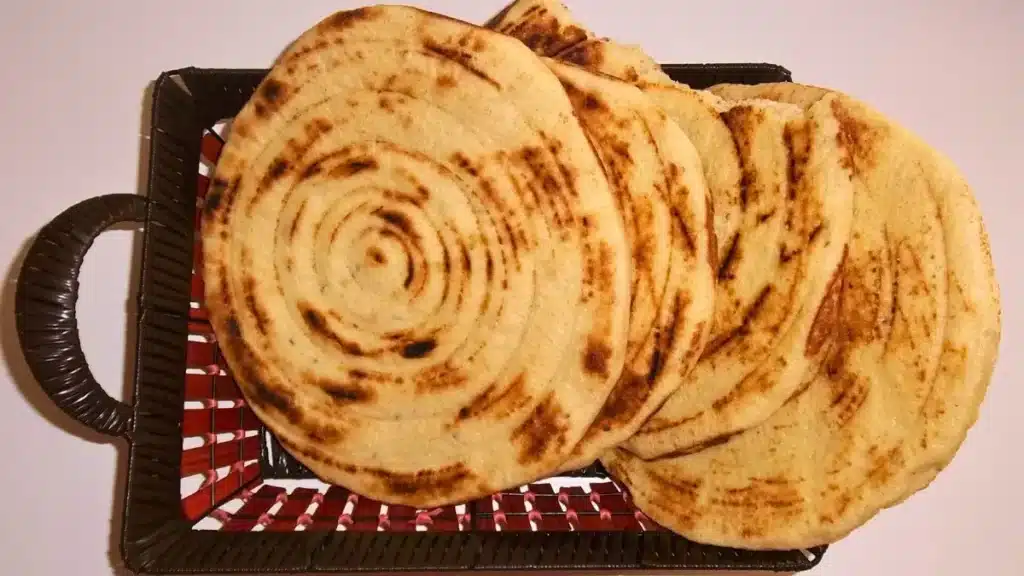
If you are exploring unique North African baking traditions and looking to bring rich festive flavors into your home kitchen, mastering an Algerian Mellaoui Bread Recipe is an essential and rewarding culinary milestone.
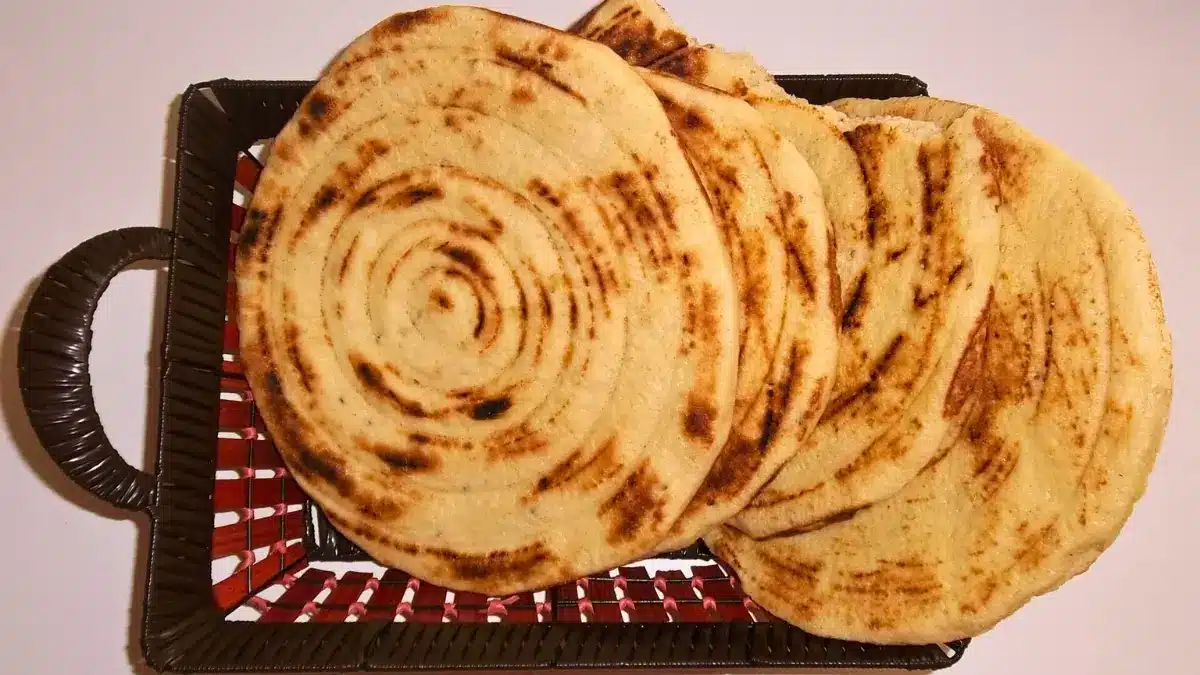
This specialty pastry, often prepared generously during festive holidays and family celebrations, sits wonderfully at the crossroads of milk bread, French croissants, and traditional layered msemen. It features a flaky, laminated dough crafted from pure fine semolina, fine white flour for structural cohesion, a touch of sugar and salt, rich butter, and warm milk. Cooked to golden perfection on a smooth iron griddle known locally as a tawa, with a gentle brush of butter and oil, it yields an irresistibly crispy exterior and a tender, melt-in-your-mouth interior. For additional culinary inspiration and baking context on traditional Mediterranean flatbreads, you can also explore Serious Eats to understand the science behind artisan laminated doughs.
The Secret Behind an Algerian Mellaoui Bread Recipe
To successfully bake an Algerian Mellaoui Bread Recipe, home cooks rely on specific techniques that guarantee a flaky spiral texture without excessive effort. The secret lies in balancing the pure fine semolina with smooth white flour, ensuring the dough remains pliable yet sturdy enough to hold the rich butter and oil mixture during the lamination process. As the dough rests and is rolled into thin circular layers, it traps pockets of fat that puff up on the hot iron griddle, creating the iconic layered structure that makes this pastry so remarkably unique and delicious.
Festive Traditions and Holiday Baking Culture
In many Algerian households, festive occasions and holiday mornings simply would not feel complete without the comforting aroma of freshly baked holiday pastries drifting through the kitchen. Families gather together to knead, roll, and coil large batches of dough, turning the preparation process into a cherished social event. Serving this golden pastry warm on holiday mornings symbolizes hospitality, joy, and the preservation of rich culinary heritage passed down through generations.
Essential Ingredients for Algerian Mellaoui Bread
Gathering high-quality ingredients is the foundation of any successful baking session. To prepare this magnificent pastry, you will need pure fine semolina, fine white flour for structural balance, a pinch of sugar, sea salt, active yeast or baking agents depending on regional preference, lukewarm milk for kneading, and a generous quantity of melted butter mixed with vegetable oil for the intricate layering process.
6 Essential Steps to Prepare Mellaoui Bread at Home
Following a structured preparation method ensures your pastry turns out light, flaky, and delicious every single time. Start by combining the dry ingredients, gradually pouring in lukewarm milk while kneading into a smooth dough, dividing into portions, resting, stretching thinly with butter and oil, coiling into spirals, and cooking evenly on a hot iron griddle.
Mastering the Iron Griddle Cooking Technique
Mastering the cooking phase of an Algerian Mellaoui Bread Recipe requires careful temperature control on your smooth iron tawa. Unlike deep-fried pastries or oven-baked loaves, this flatbread cooks directly on a heated surface where a light application of butter and oil helps fry the outer layers to a crisp, golden-brown finish while cooking the inner coils completely.
Why You Will Love This Flaky Holiday Pastry
Every single bite of an Algerian Mellaoui Bread Recipe offers an incredible contrast between the crispy, butter-infused outer rings and the soft, comforting interior layers. It is remarkably versatile, pairing wonderfully with morning coffee, warm milk, or a drizzle of honey and jam, making it one of the most satisfying homemade pastries you can ever make.
Serving Suggestions for Family Gatherings
While purists enjoy this pastry plain to fully appreciate the rich buttery flavor of the semolina and milk dough, others love serving it alongside traditional dips, local honey, or fresh dairy products during breakfast and holiday feasts. Its appealing presentation and rich aroma make it an instant crowd-pleaser for guests of all ages.
Small Business Potential: A Profitable Home Bakery Idea
Beyond family consumption, this unique pastry holds tremendous potential as a small, profitable home-based baking venture. Because demand for authentic, high-quality traditional baked goods remains consistently high during festive seasons and weekends, skilled home bakers can easily market these golden coils to local food lovers.
Tips for Success and Proper Storage
Always allow the dough adequate resting time so the gluten relaxes, preventing it from tearing when stretched into thin layers. If you have leftovers, store the cooled breads in an airtight container and warm them gently on a dry skillet before serving to restore their original crispiness and buttery aroma.
Conclusion
Mastering an Algerian Mellaoui Bread Recipe brings the true warmth, festive spirit, and rich culinary heritage of Algerian home baking straight into your kitchen. After enjoying this delightful baking experience, we cordially invite you to explore more of our handpicked authentic culinary guides to expand your cooking repertoire:
- Classic Algerian Khobz El Halib
- Authentic Kesra Thafsuth Recipe
- Oran Paella Recipe
- algerian mouskoutcho recipe
- Authentic Algerian Sandwich Bread Recipe

6 Essential Steps to Bake Algerian Mellaoui Bread Recipe
Ingredients
Method
- In a large mixing bowl, combine fine semolina, fine white flour, sugar, salt, and yeast.
- Gradually add lukewarm milk while kneading continuously until a smooth, pliable, and elastic dough forms.
- Divide the dough into 6 equal balls, cover with a clean kitchen cloth, and let them rest for 20 minutes.
- On an oiled surface, stretch each dough ball as thinly as possible, brushing generously with the butter and oil mixture.
- Fold the stretched dough into a long strip and roll it tightly into a circular spiral shape.
- Cook the spirals on a heated smooth iron griddle (tawa) over medium heat, adding a little butter and oil, until golden brown and crispy on both sides.
Notes
Calories: 330 kcal
Carbohydrates: 45 g
Protein: 6 g
Fat: 14 g
Saturated Fat: 6 g
Sodium: 380 mg