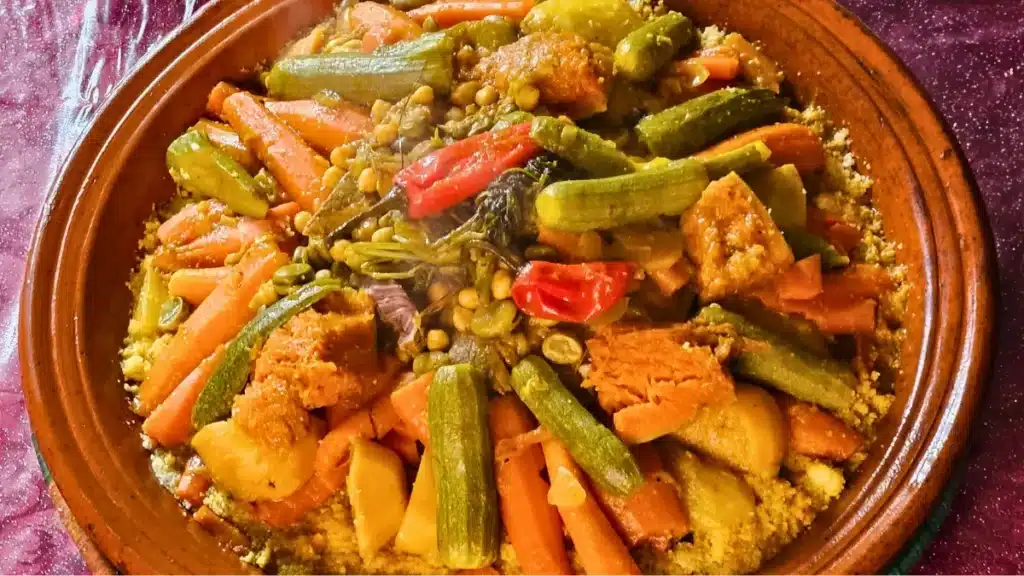
Authentic Algerian Couscous is more than just a meal; it is a timeless celebration of culture, hospitality, and family unity. For generations, this iconic dish has sat at the center of Algerian dining tables. If you have ever wondered how to recreate that perfect, fluffy semolina texture paired with a savory, spiced vegetable and meat stew, this guide is for you
Why This Authentic Algerian Couscous Recipe Stands Out
We are rediscovering the joy of slow cooking. This recipe focuses on balancing traditional techniques with the practicalities of a modern kitchen. We prioritize fresh ingredients—from the crunch of carrots and zucchini to the warmth of chickpeas and aromatic spices.
Essential Ingredients for Authentic Algerian Couscous
- To craft the perfect dish, you will need:
- The Base: High-quality medium-grain couscous (semolina).
- The Protein: Bone-in lamb pieces for a deep, rich broth.
- The Vegetables: Fresh carrots, zucchini, turnips, and chickpeas.
- The Aromatics: Onions, garlic, tomato paste, and a blend of traditional spices (paprika, black pepper, ginger, and cinnamon).
- The Broth: 1.5 to 2 liters (6–8 cups) of hot water to submerge the meat and vegetables.
Steps to Prepare Authentic Algerian Couscous
- Prepare the Broth: Sauté the meat with onions and spices until browned. Add tomato paste and 1.5 to 2 liters (6-8 cups) of hot water, then let it simmer slowly to develop flavor.
- Steam the Grains: While the broth simmers, place the couscous in a steamer (kesskass) over the pot. This allows the semolina to absorb the aromatic steam.
- Combine and Serve: Once the vegetables are tender, gently fluff the couscous with butter and serve it topped with the rich stew and meat.
Pro Tips for Success
- Double Steaming: Never rush this. Steaming the grains twice ensures a light texture that never clumps.The Broth Secret: Use bone-in lamb.
- The marrow adds a velvety consistency that is unmatched.Fluffing: Always use a fork and a touch of smen (ghee) at the very end for a glossy finish.
- Ultimately, the key to a perfect Authentic Algerian Couscous lies in the patience and love you put into every step of the preparation.
- For the best experience, serve your Authentic Algerian Couscous hot with a generous side of fresh seasonal vegetables and a bowl of chilled laban. Sharing this traditional dish brings the authentic spirit of Algerian hospitality directly to your dining table.
Frequently Asked Questions (FAQ)
- Can I prepare this ahead? Yes, the stew tastes even better the next day.
- Can I use chicken? Absolutely, it is a delicious alternative to lamb.
- How to store leftovers? Keep the grains and broth in separate containers in the fridge for up to 3 days.
Conclusion
Loved this taste of Algeria? Don’t stop here!
Discovering Algerian cuisine is an unforgettable journey of rich flavors and warm traditions. If you enjoyed making this authentic Algerian couscous , you will absolutely love these four iconic recipes next:
🥣 Authentic Algerian Chorba Frik Recipe: The ultimate hearty soup filled with rich spices and traditional green wheat.
🫓 Authentic Algerian Mahjouba Recipe: Crisp, golden stuffed semolina crepes packed with a spicy tomato and onion filling.
🍗 Classic Algerian Tajine Ez Zitoun Recipe: A savory, mouthwatering chicken and olive stew slow-cooked to perfection.
🥖 Soft Algerian Khobz Ed Dar Recipe: The fluffiest, homemade spiced bread that complements every traditional dish on your table.
Why our Authentic Algerian Couscous is more than just a meal
In Algerian culture, couscous is a profound symbol of family gathering and hospitality, traditionally bringing loved ones together around a single table, especially on Fridays and special occasions. Preparing this dish is a cherished social ritual where families unite to decorate it with fresh vegetables, fostering bonds of love and unity.
When you taste an authentic Algerian couscous, you are experiencing centuries of tradition and the
legendary Algerian hospitality. The secret lies in the “nefs” (the soul) poured into the cooking, combined with high-quality seasonal vegetables that give the broth its rich, deep flavor.
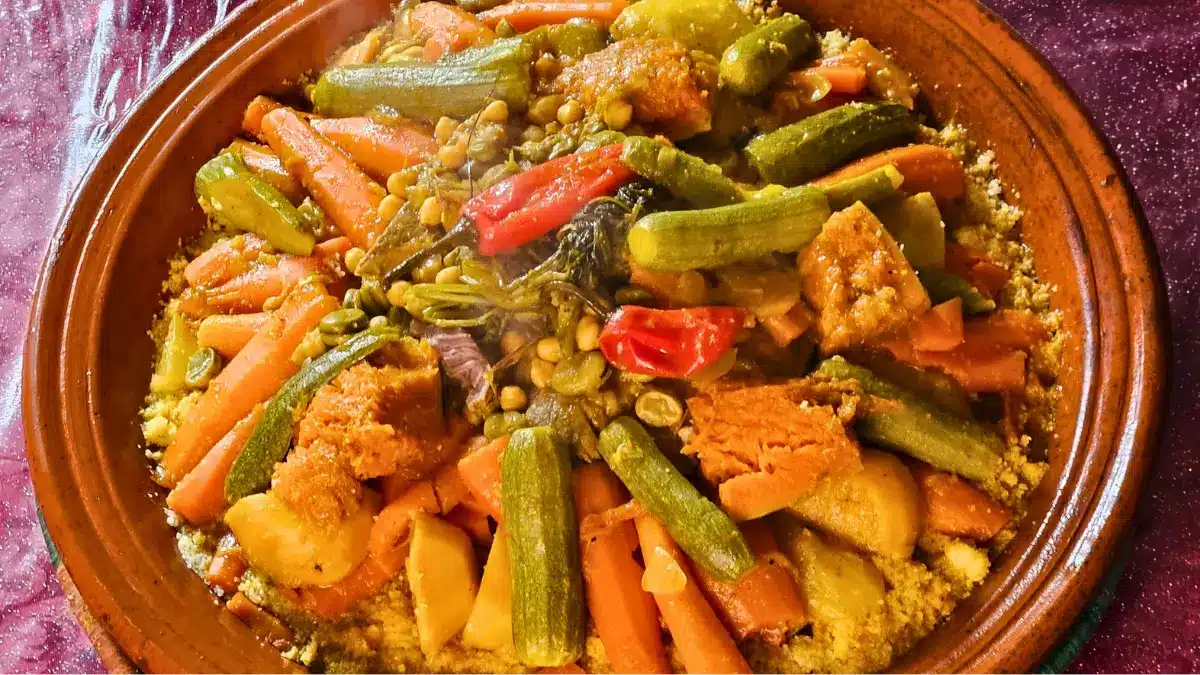

Traditional Algerian Couscous
Ingredients
Method
- Step 1: Sauté the meat and 1 onion in a pot with oil and spices until browned.
- Step 2: Add tomato paste and water, then let it simmer.
- Step 3: Steam the couscous grains over the stew using a couscoussier.
- Step 4: Add vegetables and chickpeas to the stew and continue cooking until tender.
- Step 5: Fluff the couscous with a bit of butter and serve topped with the meat and vegetables.