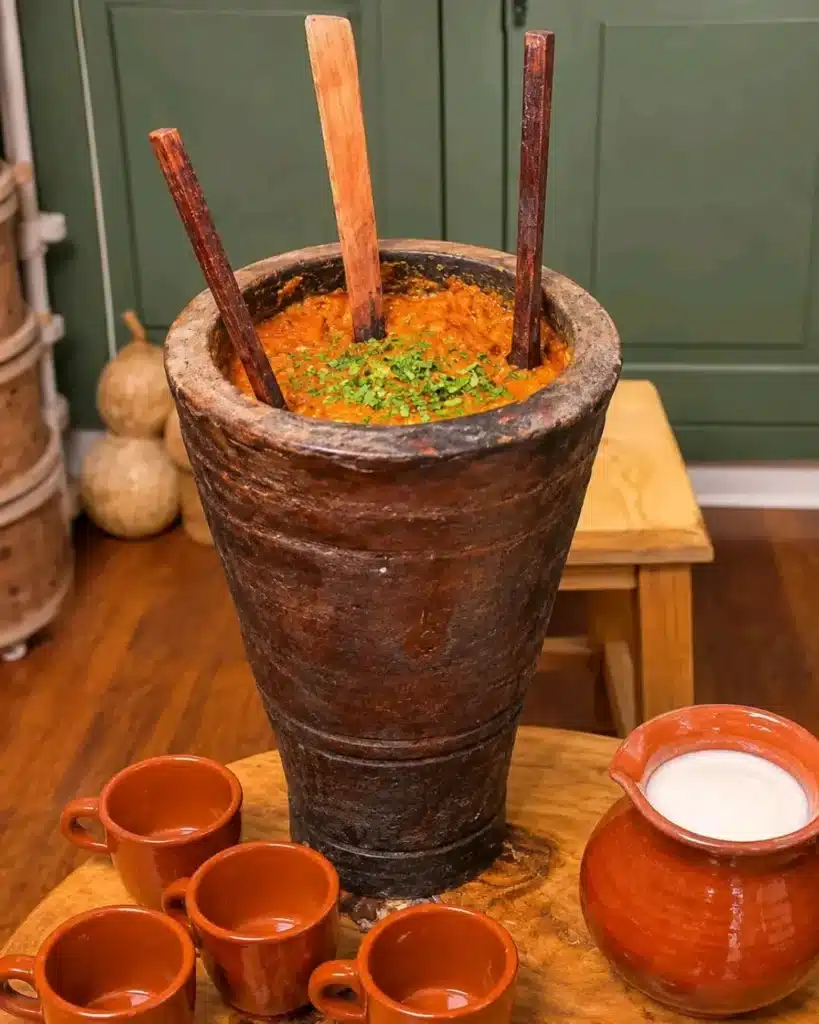
Algerian Zviti is a traditional spicy dish made with homemade semolina kesra, tomatoes, hot peppers, garlic, fresh coriander, and traditional Dhan. The ingredients are combined in a large wooden mortar called a mehraz, where they are pounded together to create a thick, flavorful mixture.
Traditionally associated with Bou Saâda and the M’Sila region, Zviti is known for its distinctive preparation and intense heat. It is traditionally served in the same wooden mortar and accompanied by cold lben (fermented milk).
What Is Algerian Zviti?
Zviti is a traditional Algerian dish made with kesra, roasted vegetables, garlic, hot peppers, and fresh coriander. The ingredients are gradually pounded together in a wooden mortar until they form a moist, thick mixture.
The mehraz is central to the traditional way of preparing and serving this dish. The wooden mortar is used both to pound the ingredients and to serve the finished Zviti.
Ingredients
For the Kesra
- 1 small cup fine semolina
- 1 small cup medium semolina
- 1 small cup water, measured with the same cup
- 1 teaspoon salt
- Oil, as needed, for flattening the dough
For the Roasted Vegetables
- 8 tomatoes
- 8 fresh green hot peppers
- 2 whole heads of garlic
For the Broth
- 500 ml water
- 1½ tablespoons tomato paste
- 1 teaspoon salt
- 8 fresh red hot peppers, cut in half
For the Mortar Mixture
- 300 g fresh coriander, added gradually, including some for garnish
- 1½ tablespoons tomato paste
- 200 g traditional Dhan
- The roasted garlic and green peppers
- The cooked tomatoes
- The crumbled kesra
- The prepared broth
How to Make Algerian Zviti
1. Prepare the Kesra
Combine the fine semolina, medium semolina, salt, and water. Knead in a stand mixer for approximately 5 minutes, until the dough becomes soft. Cover and leave it to rest for 10 minutes.
Divide the dough into balls. Use a little oil to flatten each ball to a medium thickness. Depending on the size of your tajine, prepare one large kesra or two smaller ones.
2. Cook the Kesra
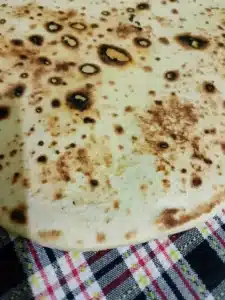
Cook the kesra on a heated traditional tajine for approximately 10 minutes, turning it as needed. Once cooked, allow it to cool enough to handle, then crumble it into small pieces.
3. Roast the Vegetables
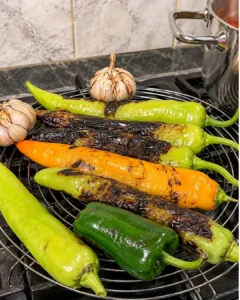
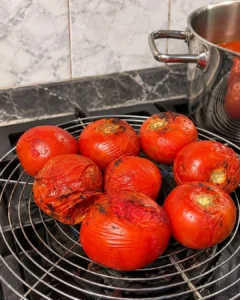
Place the tomatoes, green hot peppers, and whole heads of garlic on a rack over a flame. Roast for approximately 15 minutes, turning them as needed.
Peel the tomatoes and green peppers, then separate and peel the garlic cloves. Keep the roasted vegetables aside.
Note: The red hot peppers are not roasted. They are added to the broth.
4. Prepare the Broth
In a pot, combine 500 ml water, 1½ tablespoons tomato paste, salt, and the halved red hot peppers. Bring to a boil, add the roasted tomatoes, and cook for approximately 20 minutes.
5. Pound the Ingredients
Start by pounding the roasted garlic in the wooden mehraz with some of the fresh coriander. Add the roasted green peppers and continue pounding.
Add the remaining 1½ tablespoons of tomato paste and mash until the ingredients are well combined. Continue adding the coriander gradually throughout the preparation.
6. Add the Kesra and Broth
Add the crumbled kesra to the mortar. Gradually pour in the prepared broth while continuing to pound and mix until the bread, vegetables, and coriander are incorporated.
7. Add the Dhan
Divide the 200 g of traditional Dhan into two equal portions. When the mortar is nearly full and the mixture is still hot, add 100 g and pound until it melts into the Zviti.
Add the remaining 100 g over the top as a final garnish. Finish with the reserved fresh coriander.
How to Serve Zviti
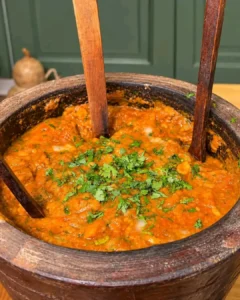
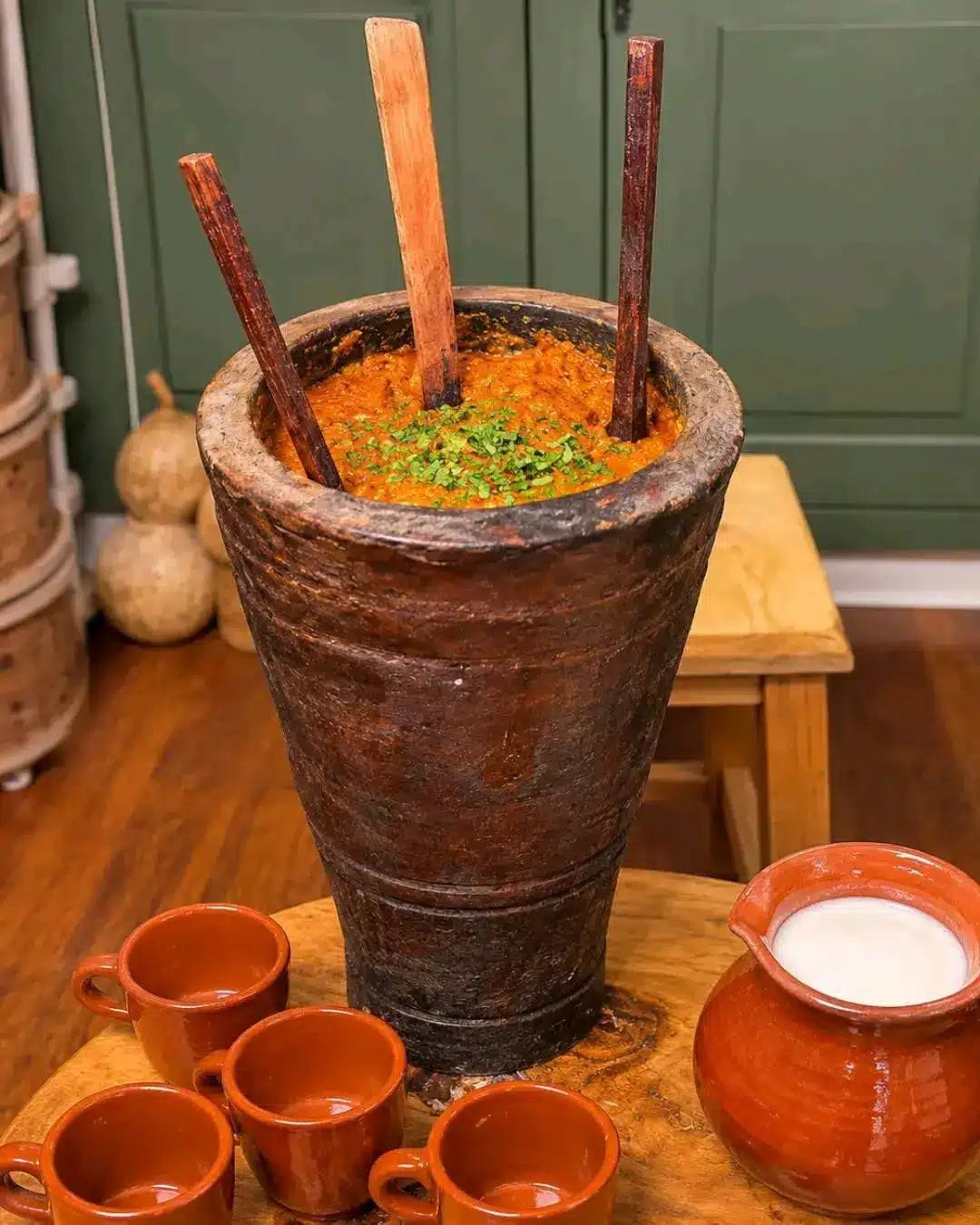
Zviti is traditionally served in the wooden mehraz and eaten with large wooden spoons. It can also be served in ordinary plates with regular spoons.
Serve it with cold lben (fermented milk), a traditional accompaniment to this spicy dish. Allow the Zviti to cool slightly before eating.
Because it contains fresh green and red hot peppers, traditional Zviti can be extremely spicy and is not suitable for children.
A Note from Wassim Rebiai
Zviti is one of the traditional dishes prepared in our home. I enjoy eating it when it is made, although I do not prepare it myself.
Although eating directly from the wooden mortar with a large wooden spoon is part of the tradition, I personally do not feel comfortable eating that way. The wooden spoon is too large for me, so I prefer serving my portion in an ordinary plate and using a regular spoon.
I also like to add a little extra salt and squeeze some fresh lemon juice over my portion. I enjoy this combination with a glass of cold lben served alongside the dish.
My Tip
If you are trying Zviti for the first time, let it cool slightly before eating and serve cold lben alongside it. Remember that traditional Zviti is very spicy and should not be served to children. You can also adjust your own portion with a little extra salt and fresh lemon juice, according to your taste.
Frequently Asked Questions
Why is Zviti prepared in a wooden mortar?
The wooden mehraz is the traditional utensil used to pound the kesra, vegetables, and other ingredients together. It is also traditionally used to serve the dish.
What is Dhan?
Dhan is a traditional dairy fat obtained by churning fermented milk. In this recipe, some is mixed into the hot Zviti and the rest is added on top.
What do you serve with Zviti?
Cold lben, or fermented milk, is traditionally served alongside Zviti.
Is Zviti suitable for children?
Traditional Zviti contains a generous amount of fresh hot peppers and can be extremely spicy. It is not suitable for children.
Discover More Algerian Recipes
- Authentic Algerian Tajine Ez-Zitoun
- Traditional Algerian Hmiss
- Traditional Algerian Tamina
- Traditional Algerian Mahjouba
- Traditional Algerian Mloukhia
Learn More About Zviti
For additional cultural information about Zviti, its ingredients, and its traditional preparation in the wooden mortar, see this Algerian tourism guide:
Algeria Tourism Guide – Traditional Zviti

Authentic Algerian Zviti recipe
Ingredients
Equipment
Method
- Combine the fine semolina, medium semolina, salt, and water. Knead in a stand mixer for approximately 5 minutes until soft. Cover and rest for 10 minutes.
- Divide the dough into balls. Use a little oil to flatten them to medium thickness. Prepare one large kesra or two smaller ones, depending on the size of your tajine. Cook for approximately 10 minutes, then crumble.
- Roast the tomatoes, green hot peppers, and whole garlic heads on a rack over a flame for approximately 15 minutes. Peel the tomatoes and peppers, and separate and peel the garlic cloves.
- In a pot, combine 500 ml water, 1½ tablespoons tomato paste, 1 teaspoon salt, and the halved red hot peppers. Bring to a boil, add the roasted tomatoes, and cook for approximately 20 minutes.
- In a traditional wooden mortar, pound the roasted garlic gradually with some fresh coriander. Add the roasted green peppers and continue pounding.
- Add 1½ tablespoons tomato paste and continue mashing. Gradually incorporate the remaining coriander, keeping some aside for garnish.
- Add the crumbled kesra and gradually pour in the prepared broth while pounding and mixing until everything is incorporated.
- Divide the 200 g Dhan into two portions. When the mortar is nearly full, add 100 g and pound until it melts into the hot mixture.
- Add the remaining 100 g Dhan on top as a garnish. Finish with the reserved fresh coriander.